Friday, 30 June 2023

Eryngium maritimum 濱海刺芹、海冬青

Common name: Sea-holly
Scientific name: Eryngium maritimum 濱海刺芹、海冬青
Genus: Eryngium 刺芹屬
Family: Apiaceae or Umbelliferae 傘形科, 繖形科, celery, carrot or parsley family

Remarks*: 

Origin: native

Date: 21st June

269 An intensely glaucous, spiny, glabrous perennial, can reach up to 60 cm.

271

270 Leaves all spiny, basal leaves 5-12 cm, sub-orbicular, stem leaves palmate (see above photo).

265

268

267 Flowers heads 1.5 - 2.5 cm; bracts spiny; bracts spiny.

263

260 

503


501


Flowers 8 mm across; bracteoles are longer than flowers.

--------------------------------------------------------------------------------
Further information about the morphology of the flowers, from "Biological Flora of the British Isles: Eryngium maritimum"

The flowering plant produces one terminal umbel that is larger and flowers earlier than the other umbels (Burmester 2010). The inflorescence is a dense, subglobose or ovoid capitulum, 1.5–3 cm in length c. 2 cm across (Bodkin 1986; Stace 2010) with ovate, spiny bracts. The inflorescence is pale blue to conspicuously amethystine. Each inflorescence contains 25–50, pedicellate, inconspicuous five-petalled flowers. The sepals are 4–5 mm long, ovate-lanceolate, aristate and bluish. Petals are light blue, each about 10 mm long. The flowers have purplish-bluish filaments, sometimes more pink (Sell & Murrell 2009). The bracteoles are 3-cuspidate, nearly three-lobed, greenish above and below, never bicoloured, 2.5–4 cm in length, herbaceous or coriaceous, and ovate or ovate-lanceolate (Mathias & Lincoln 1941). In the axils of the bracts, branches (paraclades) develop up to a third order, with further flower heads on these. Thus, a whorl develops below the terminal umbel. Fertile seeds develop mainly in the upper flower heads. The number of flower heads is usually, but not necessarily always, larger in older individuals (Burmester 2010). The close agglomeration of flowers in a flower head and the coloured bracts serve to attract insects (Hegi 1975). During the flowering season, cells enclose anthocyanins which cause the colour and dissipate with drying at the end of the growing season (Eberle 1979).

The ovary is epigynous with an anatropous ovule. Nectar glands, with nectar of high glucose content (about 2%), occur on a disc at the base of the flowers (Eberle 1979). Flowering starts with the basal flowers of the inflorescence and proceeds upwards (Eberle 1979). The flowers are protandrous (Bell 1971), and the style is receptive 3–5 days after anthesis (Burmester 2010). Flowers are usually cross-pollinated but selfing is possible (Klotz, Kühn & Durka 2002).

Thursday, 29 June 2023

Asparagus officinalis 蘆筍、石刁柏

Common name: Garden Asparagus
Scientific name: Asparagus officinalis 蘆筍、石刁柏
Genus: Asparagus 天門冬屬
Family: Asparagaceae 天門冬科*, asparagus family

Remarks*: It is previously belonged to the Liliaceae 百合科, the lily family.

Origin: Archaeophyte (established before 1500 AD.) A Eurosiberian Temperate taxon; native over much of Europe, eastwards to central Asia. Is has been cultivated in Britain since Roman times.

Date: 21st June

134 A rhizomatous perennial.

109

113 Stem erect, much-branched, can reach up to 1.5 m.

114

094

093

099 Leaves reduced to small scales (the small brown structure at the base of the clusters of needle-like structures), with clusters of 4-15 green needle-like cladodes 葉狀莖 in their axils that perform the function of leaves. Cladodes 10-20 mm, flexible.

108

111 Younger flower buds. 

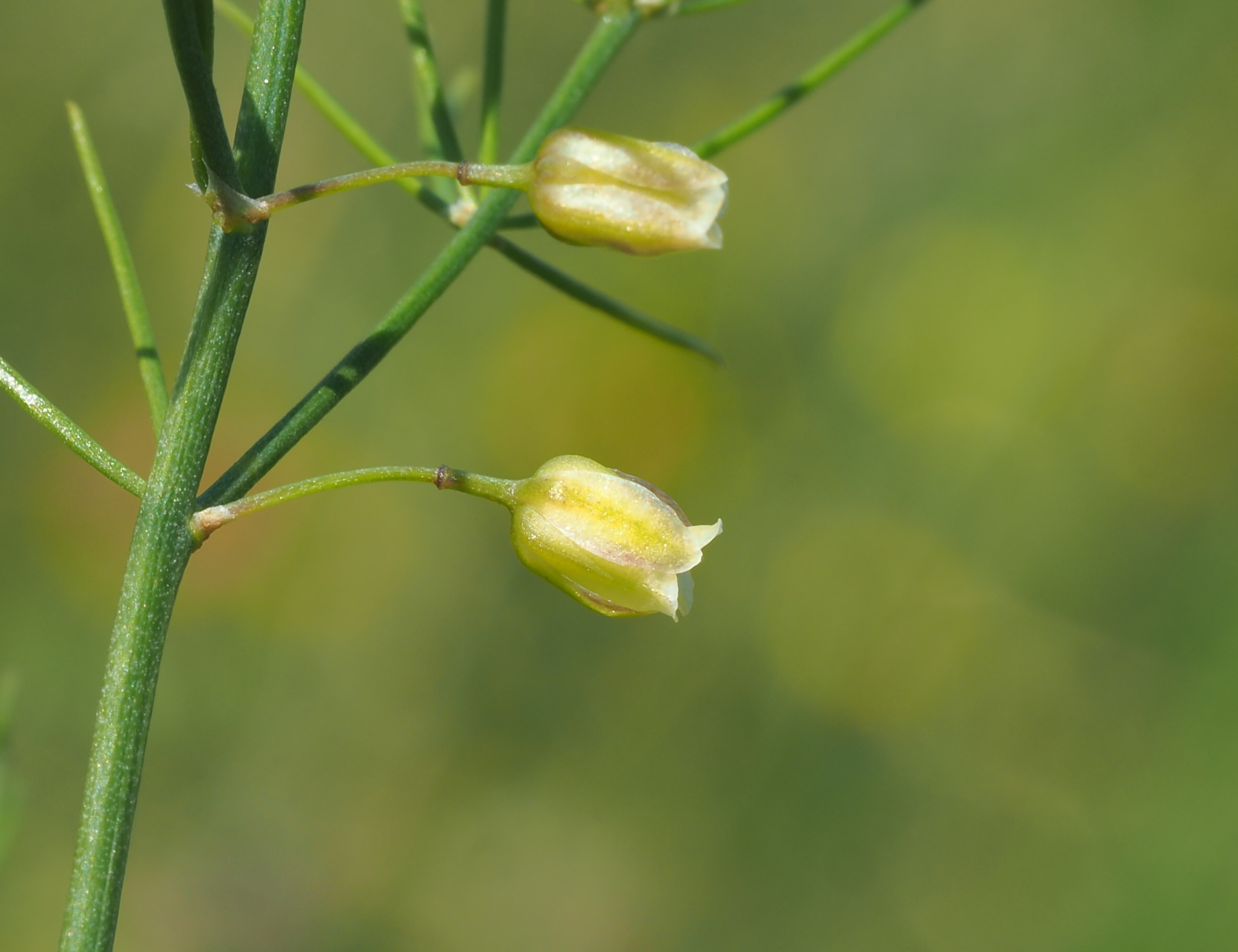
100 Flower buds ready to open; pedicels 6-10 mm.

105 Flower buds ready to open or flower withered?

098 Flowers 1-2 in axils of scale leaves on main stem.

106 Flower; tepals fused at base, 4.5-6.5 mm, greenish to pale yellow.

104 Dioecious plant (having male and female flowers on separate plants). Male flower.

----------------------------------------------------------------------------------------
The following are female plants:
276 (taken on 9th Aug on another location)

282 Female flowers. (taken on 9th Aug on another location)

280 Female flowers. (taken on 9th Aug on another location)

281 Female flowers.

133 Berries. (21st June)

0036 Berries, would turn red when ripe. (taken on 9th Aug on another location) 

Cakile maritima 海濱芥

Common name: Sea Rocket
Scientific name: Cakile maritima 海濱芥
Genus: Cakile 海濱芥屬
Family: Brassicaceae or Cruiferae 十字花科, mustards, crucifers or cabbage family

Remarks*: 

Origin: Native

Date: 21st June

520 A prostrate to erect, glabrous, succulent annual, can reach up to 50 cm.

511

516 Leaves simple to pinnate.

518

519

517 Flower sepals erect; petals are 2 times as long as sepals.

515 Flower petals 6-10 mm, mauve, pink or white.

Monday, 26 June 2023

Hydrocotyle vulgaris 野天胡荽、歐洲天胡荽、銅錢草、金錢草、錢幣草、圓幣草、少脈香菇草、香菇錢、盾葉天胡荽

Common name: Marsh Pennywort
Scientific name: Hydrocotyle vulgaris 野天胡荽、歐洲天胡荽、銅錢草、金錢草、錢幣草、圓幣草、少脈香菇草、香菇錢、盾葉天胡荽
Genus: Hydrocotyle 天胡荽屬*
Family: Araliaceae 五加科, ginseng family

Remarks*: It was placed in Hydrocotylaceae 天胡荽科, pennywort family, previously.

Origin: native

Date: 21st June

335 A slender, creeping perennial. Leaves peltate, 1-5 cm across, circular, shallowly lobed.

334 Rooting at nodes. Petioles 1-2.5 cm, erect.


2-5 flowered umbels; peduncles are shorter than petioles.


Flowers tiny, about 1 mm across.


Fruits

Blackstonia perfoliata 綺蓮花

Common name: Yellow-wort
Scientific name: Blackstonia perfoliata 綺蓮花
Genus: Blackstonia 綺蓮花屬
Family: Gentianaceae 龍膽科, gentian family

Remarks*: 

Origin: native

Date: 21st June


452 An erect, glaucoous annual, can reach up to 45 cm.

449 Stem leaves broad, fused across stem at base.

450

448 Flowers not fully open. Corolla 10-15 mm across, 6-8 petals, yellow.

Cynoglossum officinale 紅花琉璃草

Common name: Hound's-tongue
Scientific name: Cynoglossum officinale 紅花琉璃草
Genus: Cynoglossum 琉璃草屬
Family: Boraginaceae 紫草科, borage or forget-me-not family

Remarks*: 

Origin: native

Date: 21st May (fruiting) & 16th July (1 flower left)

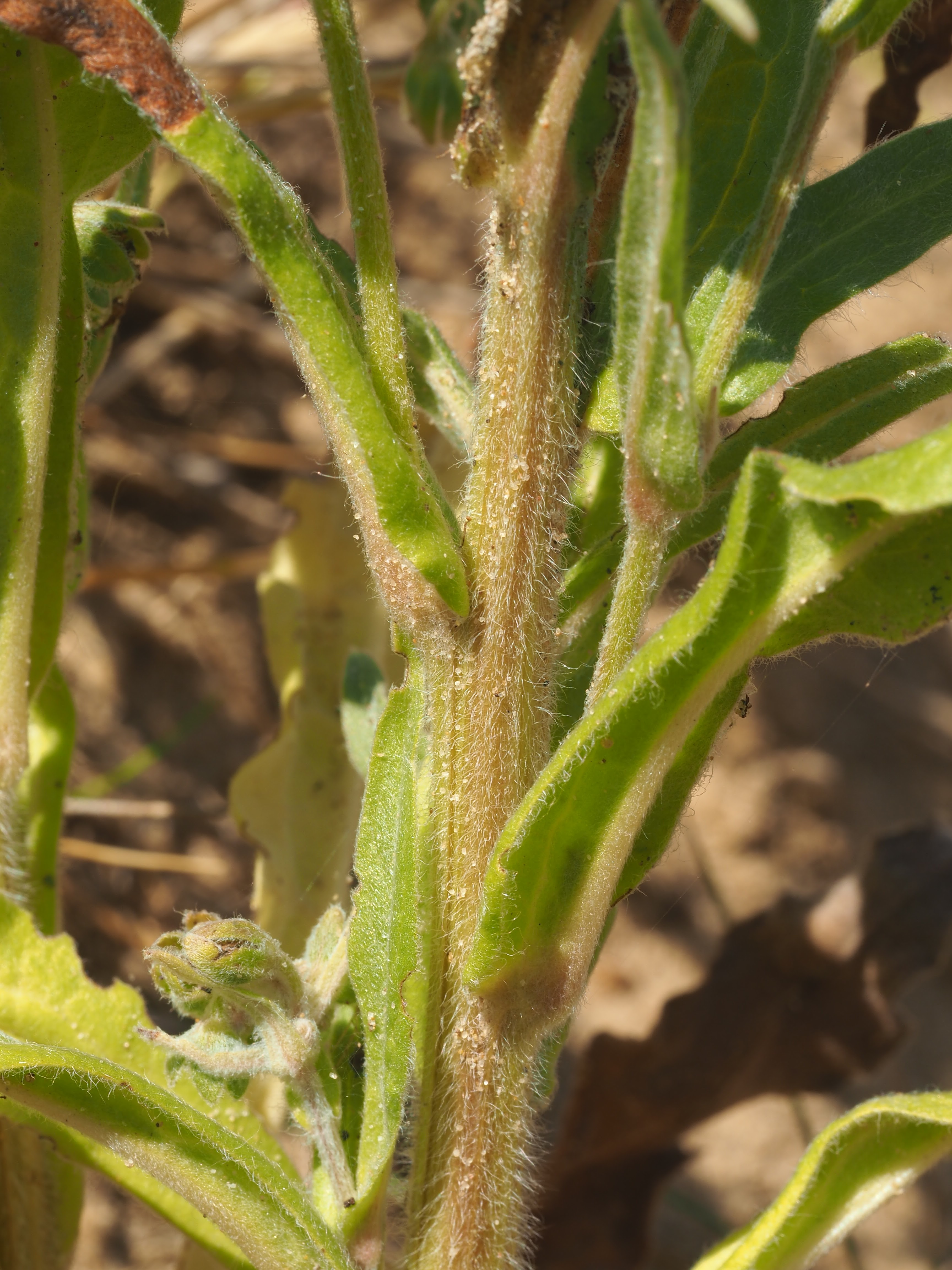
468 An erect, softly pubescent grey-green biennial, can reach to 90cm.

471 Stem.

469 Base of the stem.

470 

-------------------------------------------------------------------------------------
The following three photos were taken at different locations on 16th July.

192 Basal leaves softly silky on both surfaces, lanceolate-ovate, to about 30cm.

195


194

Corolla 6-10mm across.

--------------------------------------------------------------------------------------

478

568

574 Calyx divided almost to base. Pedicels about 5mm.

477 Elongated, spirally, branched inflorescence. 

475 Fruits: large nutlet covered by hooked bristles, with distinct thickened border.