Tuesday, 23 May 2023

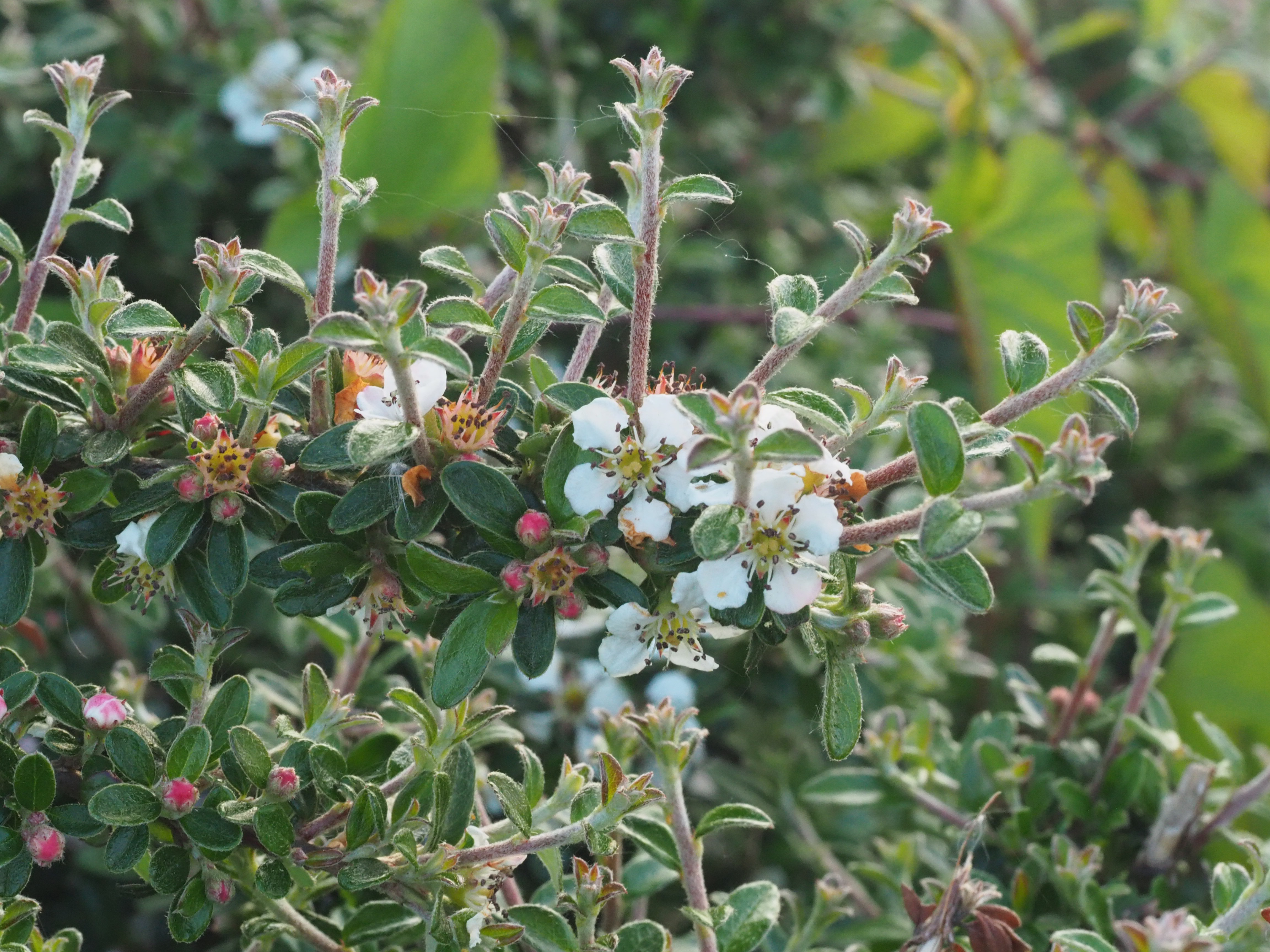
Cotoneaster microphyllus var. thymifolius 細葉小葉栒子

Common name: Thyme Leaf Cotoneaster
Scientific name:  Cotoneaster microphyllus var. thymifolius 細葉小葉栒子*
Genus: Cotoneaster 栒子屬
Family: Rosaceae 薔薇科, rose family

Remarks*: There are around 100 Cotoneaster spp. have been reported at large in UK. The identity of this plant needed to be confirmed in the future. Cotoneaster integrifolius (Entire-leaved Cotoneaster) is a synonym of Cotoneaster microphyllus var. thymifolius.

Origin: Neophyte (established after 1500 AD). A native of the Himalayas. It was introduced by 1824 and was found in the wild in 1892.

Date: 22nd May
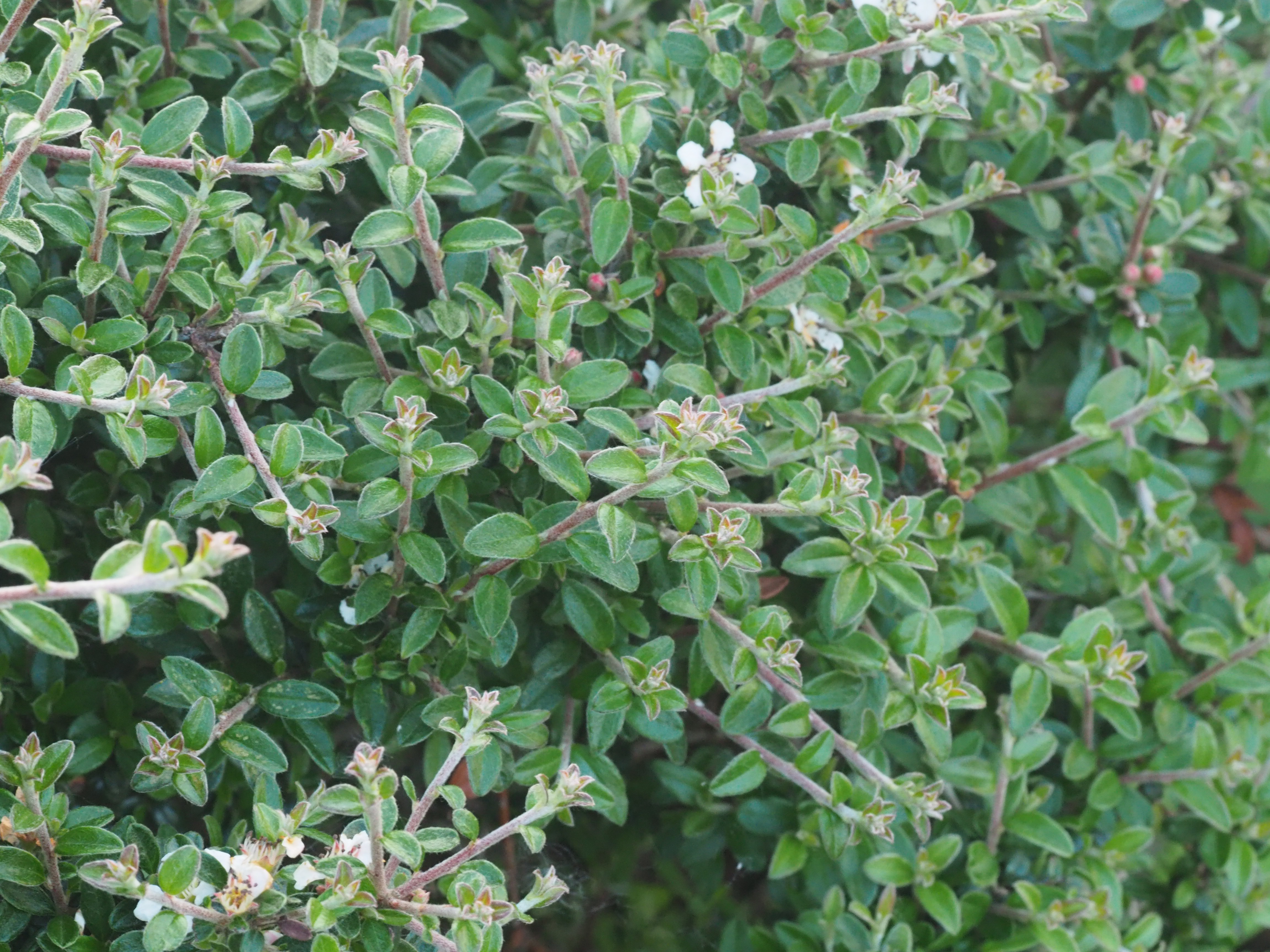
88 A procumbent to arching evergeen shrub, can reach up to 1m.
84

82

70

71 Leaf ovate, 7-15mm, shining above.

79 Leaf pubescent beneath.

90

95

72

75

68 Flower white, 11mm across, petals spreading.

92

93

94 Fruit red, 8-10mm.

Friday, 19 May 2023

Cotoneaster x suecicus

Common name: Swedish Cotoneaster
Scientific name:  Cotoneaster x suecicus
Genus: Cotoneaster 栒子屬
Family: Rosaceae 薔薇科, rose family

Remarks*: There are around 100 Cotoneaster spp. have been reported at large in UK. The identity of this plant needed to be confirmed in the future. 

Origin: A cultivated hybrid (alien x alien). The hybrid parents are Cotoneaster conspicuus 大果栒子 and C. dammeri 矮生栒子. It was known in the wild by 1984, and first recorded in Ireland in 2002.

Date: 2nd May

117

118

112

113

111

110

115

108

109

114

Thursday, 18 May 2023

Cotoneaster hjelmqvistii 海姆維斯蒂栒子

Common name: Hjelmqvist's Cotoneaster
Scientific name: Cotoneaster hjelmqvistii 海姆維斯蒂栒子*
Genus: Cotoneaster 栒子屬
Family: Rosaceae 薔薇科, rose family

Origin: Neophyte (established after 1500 AD). It is a native of western China (Gansu 甘肅省). It has been cultivated since around 1954 and was recorded from the wild in 1981. 

       --------------------------------------------------------------------------------------------

Remarks*:
1/ Cotoneaster hjelmqvistii is an unresolved name (it is not yet possible to assign a status of either 'accepted' or 'synonym') in 'The Plant List' .

2/ Cotoneaster hjelmqvistii is a native of western China (Gansu) in 'Welcome to Plant Atlas 2020'.

3/ The native range of Cotoneaster hjelmqvistii is China (Gansu) in 'Royal Botanical Gardens Kew - Plants of the World Online'.


5/ There is no entry of Cotoneaster hjelmqvistii, but there is Cotoneaster apiculatus 細尖栒子 in 'Flora of China - eFloras.org

          -----------------------------------------------------------------------------------------

6/ There are around 100 Cotoneaster spp. have been reported at large in UK. And Cotoneaster hjelmqvistii was much confused and misidentified in cultivation in the past and often sold as Cotoneaster horizontalis 'Robustus' or as C. rotundifolius. in 'Flora of East Anglia - An Identification Guide '

7/ The keys to Cotoneaster apiculatus 細尖栒子 and C. horizontalis 平枝栒子 and C. rotundifolius 圓葉栒子 in  'Flora of China - eFloras.org' are as follows:

a. Petals white, spreading; fruit red, with 2 or 3(–5) pyrenes; prostrate or low evergreen shrub. - C. rotundifolius 圓葉栒子
b. Petals red, rarely pink, erect; fruit red, rarely purplish black, with (1 or)2 or 3(or 4) pyrenes; spreading or erect, deciduous or semievergreen shrub. --
i. Hypanthium abaxially glabrous; erect shrub. -- C. apiculatus 細尖栒子
ii. Hypanthium abaxially pubescent; prostrate or erect shrub. -- C. horizontalis 平枝栒子

8/ From 'Manual of the Alien Plants of Belgium', Cotoneaster hjelmqvistii looks like a robust form of C. horizontalis and it is frequently sold as cv ‘Robusta’ of the latter (De Koning & al. 2000, Fryer & Hylmö 2009; see also Flinck & Hylmö 1991). However, they are easily told apart: the former is usually taller, often with more erect, arching and flexuous branches with branchlets much less densely set (hence a less distinct herringbone pattern) and its leaves are always larger, almost orbicular, more papery, early turning reddish and dropping in autumn (by mid-October). These and some additional useful features are summarized beneath:

a.  Leaves almost orbicular, 13-25 x 10-25 mm, obtuse with mucronate apex, chartaceous (papery) and early turning reddish and dropping (by mid-October). Taller plant, often with more erect, arching and flexuous branches with branchlets not densely set (herringbone pattern not very distinct). Hypanthium soon becoming glabrous (glabrescent) -- C. hjelmqvistii
b. Leaves smaller, 5-12 x 5-9 mm, shortly acuminate to acute at apex, rather coriaceous (leathery) and not dropped before winter. Smaller, decumbent-ascending plant with branchlets very closely set (very distinct herringbone pattern). Hypanthium sparsely pilose-strigose. -- C. horizontalis 

Date: 7th May

24

23

25

19

18

21

16

15

14

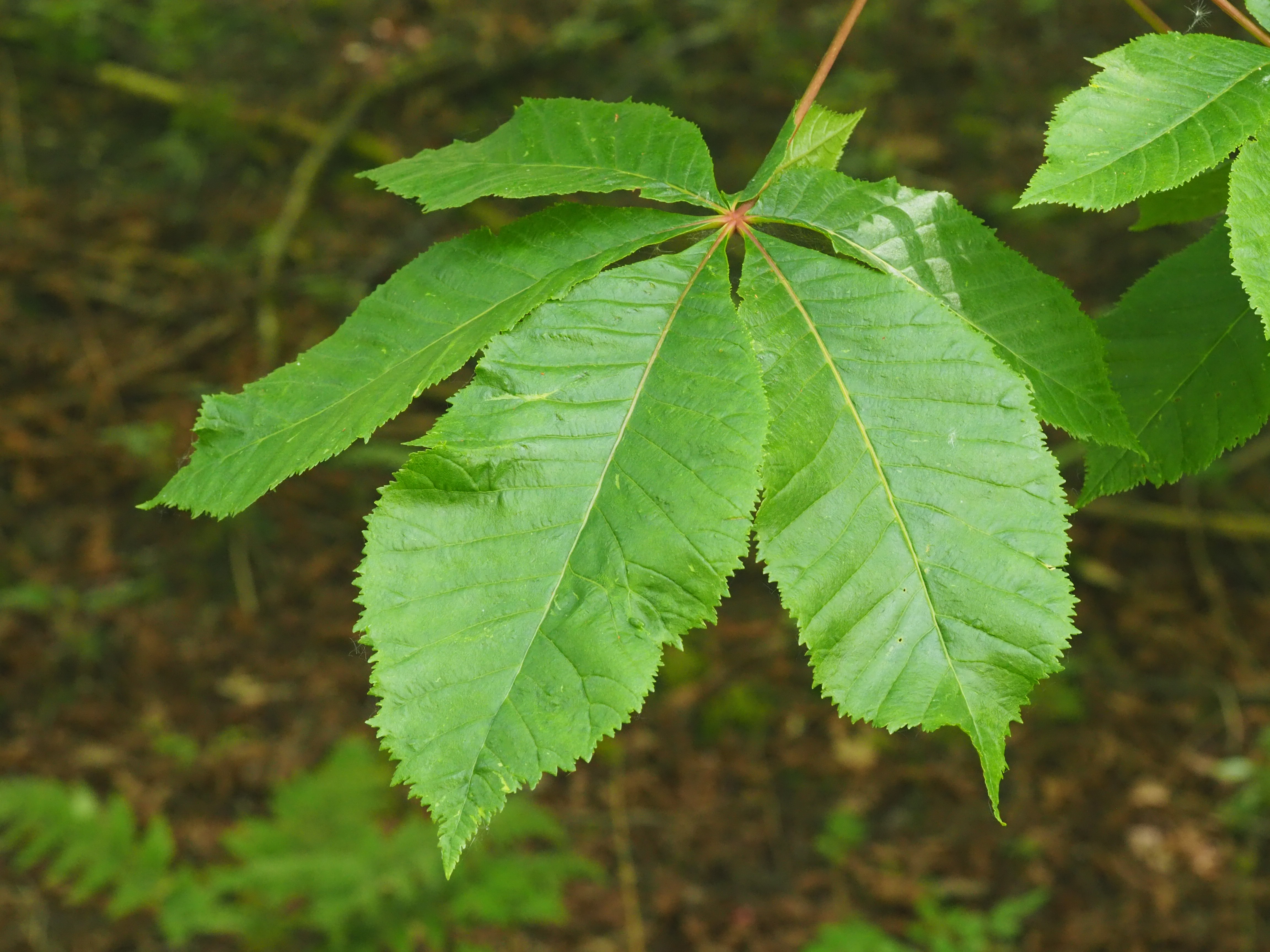
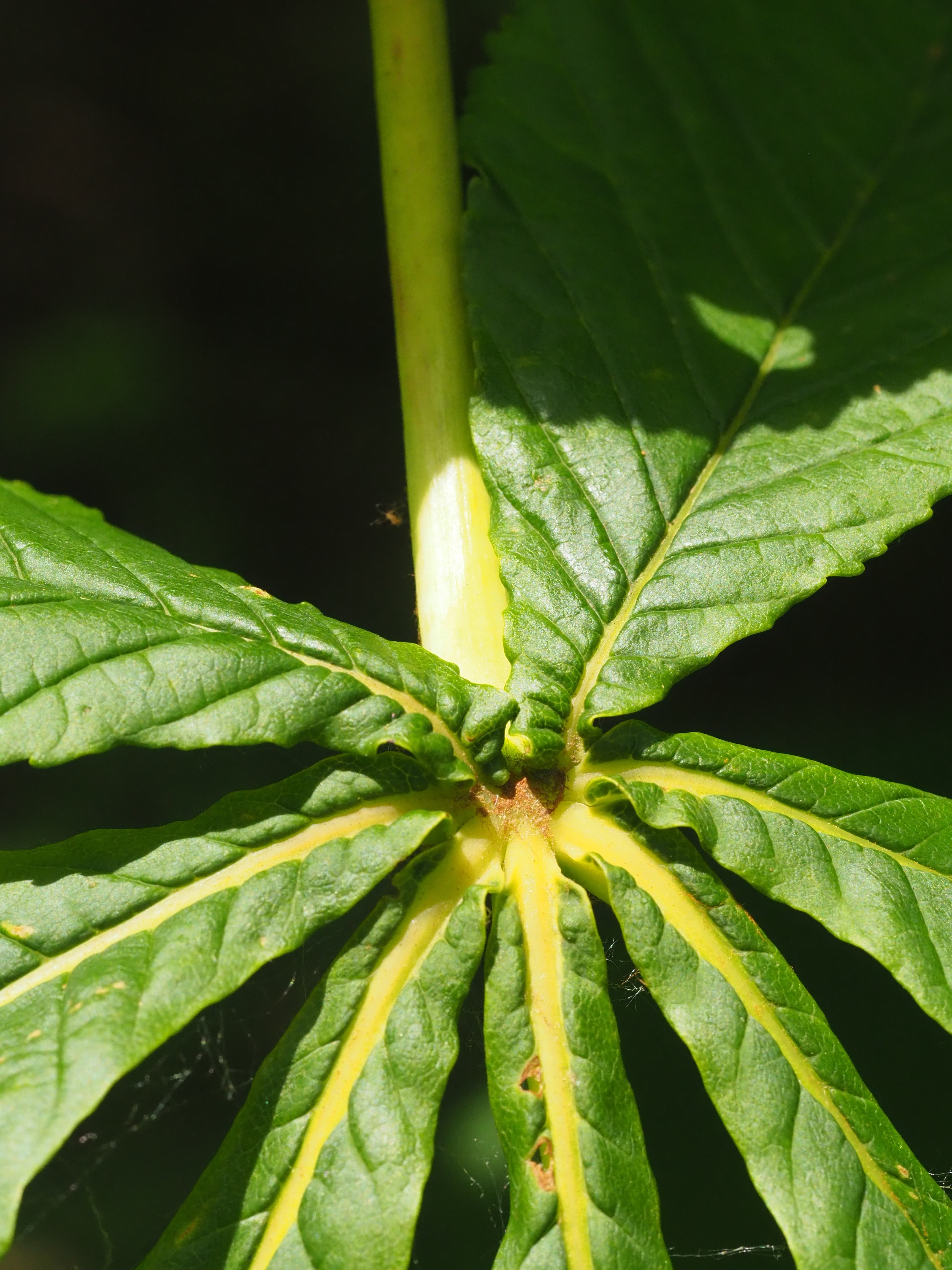
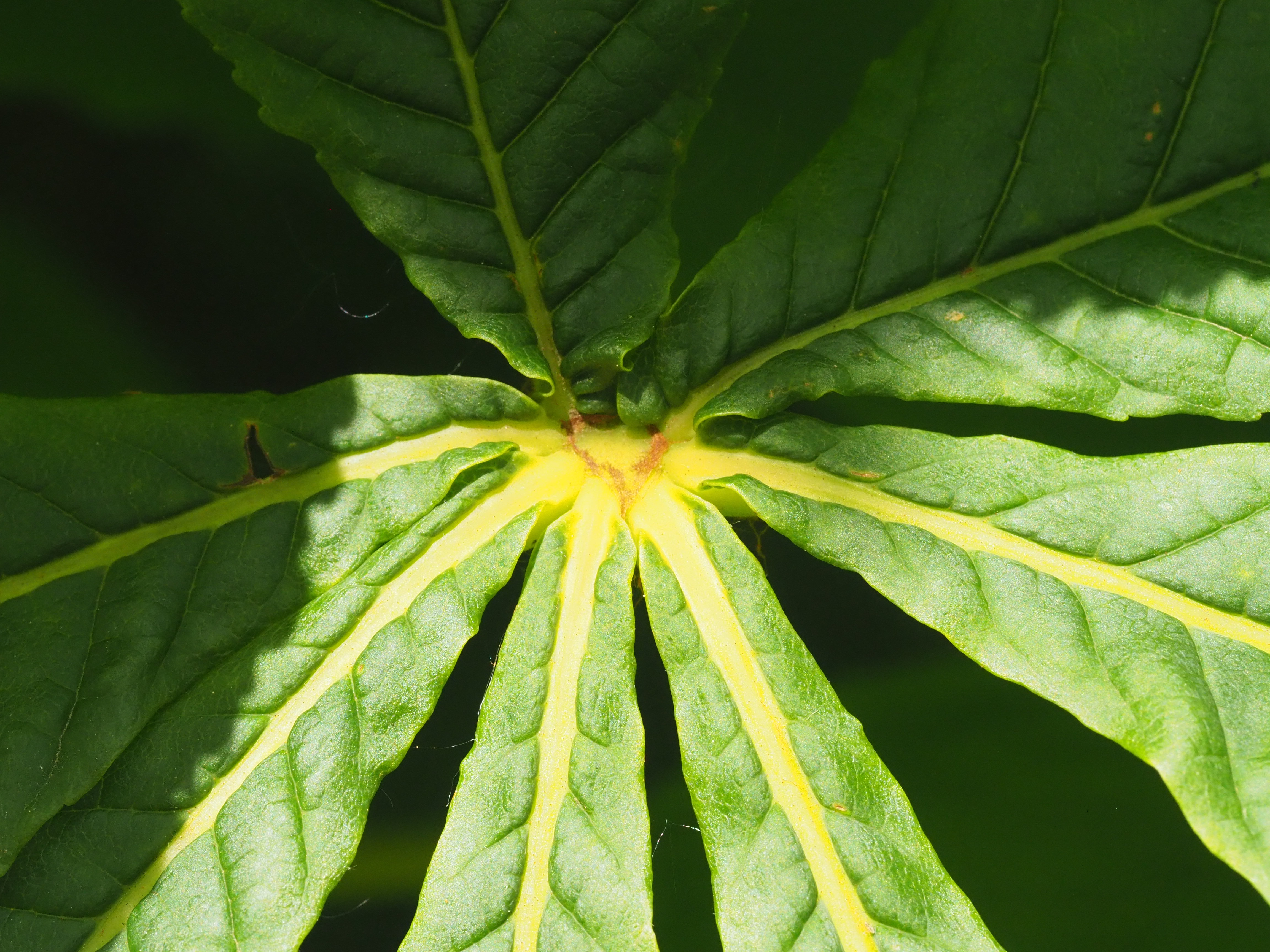
Aesculus x carnea 紅花七葉樹

Common name: Red Horse-chestnut
Scientific name: Aesculus x carnea 紅花七葉樹
Genus: Aesculus 七葉樹屬*
Family: Sapindaceae 無患子科,  soapberry family

Remarks*: It is formerly placed in Hippocastanaceae 七葉樹科. But the family now becomes Hippocastanoideae 七葉樹亞科, a subfamily of Sapindaceae.

Origin: Neophyte (established after 1500 AD). It is an alloploid 異源多倍體 hybrid of garden origin, derivied from A. hippocastanum 七葉樹、歐洲七葉樹、馬栗 and A. pavia 北美紅花七葉樹 in the early 19th century. It was cultivated since 1818 and was recorded in the wild by 1955.

Date: 14th May

161

164

162

165

166

169

153

160

159

158

157

155

Aesculus hippocastanum 七葉樹、歐洲七葉樹、馬栗

Common name: Horse-chestnut
Scientific name: Aesculus hippocastanum 七葉樹、歐洲七葉樹、馬栗
Genus: Aesculus 七葉樹屬*
Family: Sapindaceae 無患子科,  soapberry family

Remarks*: It is formerly placed in Hippocastanaceae 七葉樹科. But the family now becomes Hippocastanoideae 七葉樹亞科, a subfamily of Sapindaceae.

Origin: Neophyte (established after 1500 AD). It is a native of Balkan Peninsula 巴爾幹半島. It was introduced in 1629.

Date: 14th May

182

186

187

189

190

180

176

175

172