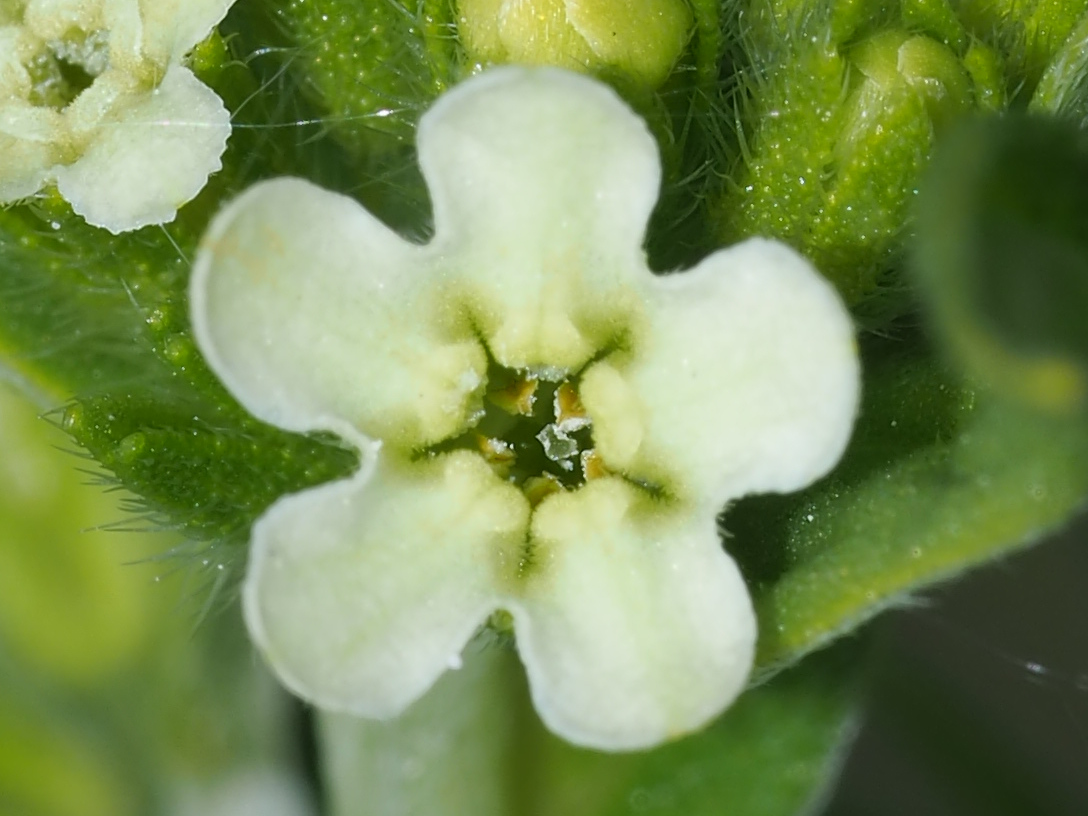
Monday, 26 May 2025

Pinus sylvestris 歐洲赤松

Common name: Scot Pine
Scientific name: Pinus sylvestris 歐洲赤松
Genus: Pinus 松屬
Family: Pinaceae 松科, pine family
Class: Pinopsida 松柏網
Divison: Pinophyta 松柏門

Origin: native

Date: 11th and 8th May (male and female cones) 


An evergreen tree, can grow up to 40 m. The following 4 photos [404-407]
showing the tree trunks from the base to the top:
[407]

[406]

[405]

[404] Tree barks on the stem.

[410] Look at the upper trunk. This photo is taken at the lateral branch.

[410_1] The distinctive orange-brown (B) trunk, shed in peeling scales.

[411] Another lateral branch.

[411_1]  The distinctive orange-brown (B) trunk, shed in peeling scales.

[183_1] Needles at the base of the male cones.

[401_1] Needles in pairs.
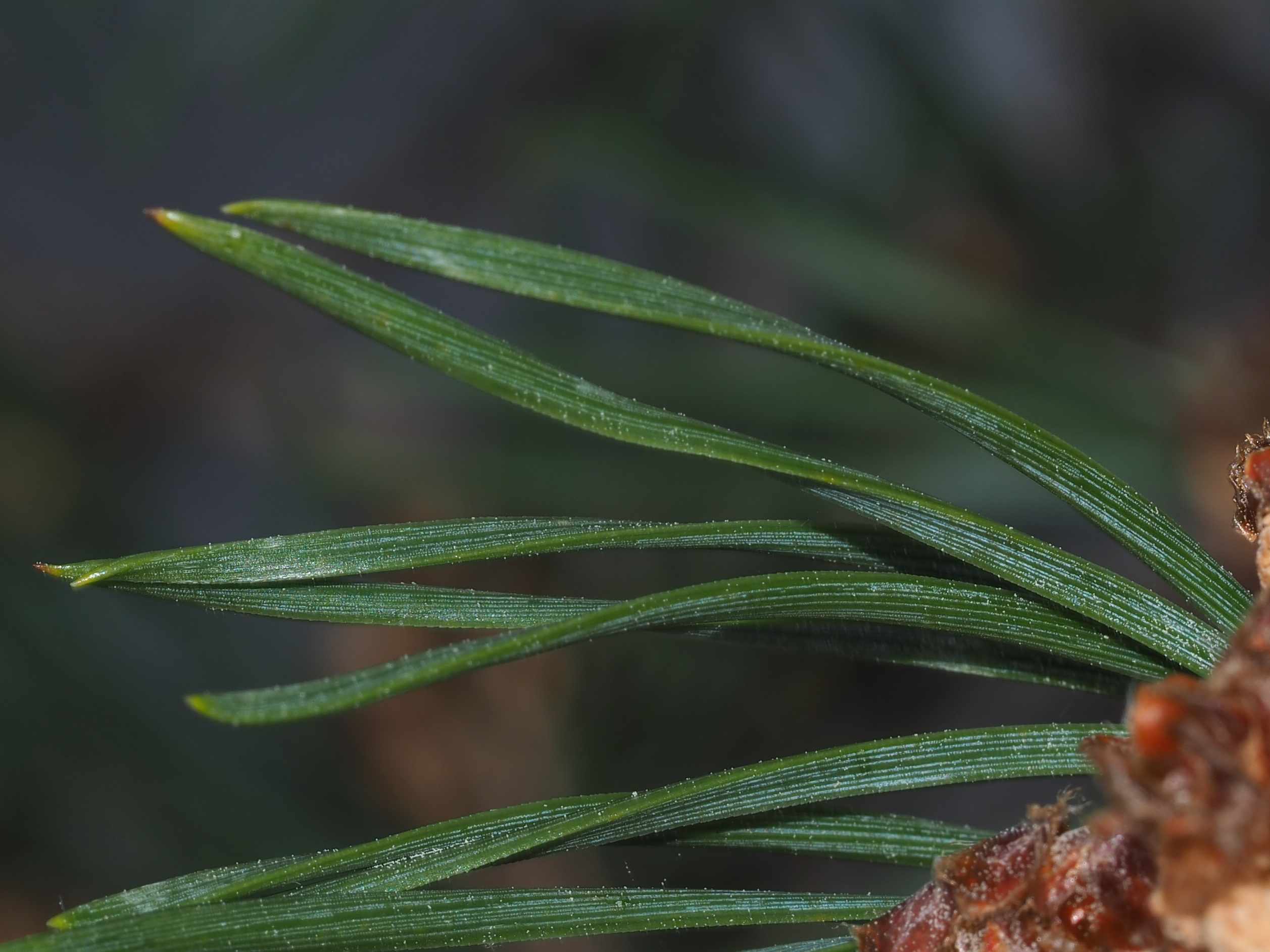
[184_1] Needles 4-8 cm, twisted and rather blue-green (glaucous 淡灰綠色,表面有一層白霜的).

----------------------------------------------------------

[190] A lot of male cones. (taken on 11th May)

[400] A lot of male cones at the base of new shoot.

[400_1] Enlarged photo above showing one male cone (strobilus) with microsporophylls.

----------------------------------------------------------

[408] Some female cones are found at the tips of new shoots. Note that Pinus sylvestri is monoecious, so both male and female cones could be seen on the same tree.

[408_1a] Female cones (red structures above) are found at the tips of new shoots.

[408_1b] Female cones (red structures above) are found at the tips of new shoots. An green immature cone could also be seen above.

[408_2a] Another position of the tree: female cones (red structures above) are found at the tips of new shoots.

The following 3 photos [414, 415, 415_1] were taken from another young plant showing the new shoot.
[414] New shoots developing.

[415] New shoots.

[415_1] Enlarged above to show the tip of new shoot, new needles are emerging from brown leaf sheaths. Female cones may appears at the tip of the new shoot afterwards.

[408_2b] Another position of the tree: female cones (red structures above) are found at the tips of new shoots.

[408_3a] Female cones (red structures above) are found at the tips of new shoots. An green immature cone could also be seen above.

[408_4] Yellow male cones and green immature cones could be seen above.

[408_3b] An green immature cone.

[398] A mature (female) cone 3-7 cm, with woody seed scales already opened to release the seeds. The cone scales (seed scales) are not spine-tipped.

Sunday, 25 May 2025

Juniperus communis 歐刺柏

Common name: Common Juniper
Scientific name: Juniperus communis 歐刺柏
Genus: Juniperus 刺柏屬
Family: Cupressaceae 柏科, cypress family
Class: Pinopsida 松柏網
Divison: Pinophyta 松柏門

Origin: native

Date: 11th and 8th May (male and female cones)


[158] An evergreen tree or shrub, can grow to 10 m. (taken on 11th May)

[489] Another individual, in a prostrate spreading shrub. (not like a tree)

[488] Male cones could be seen in this individual, it is a male plant.

[391] Stem.

[157_1] Young vegetative bud. It is a bit orange in color. (taken on 11th May)

[383] Young vegetative bud.

The following photos are also different stages of vegetative buds:

[486_1]

[390_1]

[388_2] Vegetative buds and scales on the stem.

[390_2]

[388_3]

[387] Leaves are arranged in whorls or three (as indicated as red numbers 1, 2 and 3 above).

[485_1] Base of leaf is jointed or articulated.

[384_1] Leaves 5-15 mm, narrow, stiff.

[384_2] Leaves sharp-pointed. Inner surface with a vertical white stomatal band.

[383_2] Outer surface of leaves.

[382] Older twig showing the scales left on the stem.

[282_1] Enlarged photo above showing the scales left on the stem.

---------------------------------------------------------------
Juniperus communis is dioecious, the following photos come from male plants:

[486] Male strobili on male plant.

[486_4] Enlarged photo above to show more clearly the male stobili.

[486_3] Very young male strobilus.

[486_1] Side view of a male strobilus. The purple structure is the microsporophylls whereas the attached orange ball-like structures are the microsporangia.

[486_2]

[482_1] The top view of an open male strobilus (top of the above photo)

---------------------------------------------------------------
The following photos showing different stages of female strobili of female plant.

[392] Different stages of the female strobili of female plant.

[381] Young female strobili.

[394] Ripe female strobili, ready to open to expose the three micropyles and secrete the pollination drops to receive pollens from male plants.


[394_3] Enlarged photo above showing one female strobilus (megastrobilus). 

[394_2] Probably fertilized, as the terminal portion enlarged now.

[395] Side view of another fertilized female strobilus (seed cone).

[384] Further developing of the female seed cone.

[392] Maybe a later stage of the female seed cone as the uppermost scales seems to fuse together more tightly and the cone changes to purple in color.

[380] 6 scales fused together to form a fleshy female cone, resembling a berry. It is now covered with a white coating. The cone is green when young and beceomes blue-black when mature (took 18months to ripe, and have smell of gin)

Friday, 16 May 2025

Lithospermum officinale 小花紫草

Common name: Common Gromwell
Scientific name: Lithospermum officinale 小花紫草
Genus: Lithospermum 紫草屬
Family: Boraginaceae 紫草科, borage or forget-me-not family

Origin: native

Date: 11st May


[247] An erect, much-branched, pubescent perennial, can reach to 80 cm.

[242]

[241] Leaves to 7 cm.

[238_1] Underside of the leaves.

[238_2] Note the conspicuous lateral nerves beneath the leaf and the pubescent petiole and stem.      

[245]

[239]

[236]

[248]

[233]

[233_1] Flower bud with 5 green sepals outside and 5 yellowish closed petals in the center.

[239_1] Lateral view of a flower bud.

[236_1] Lateral view of the flowers. Flower stalks could also be seen above.

[248_1] Closer lateral view of a flower.

[233_1] Yellowish corolla 3-6 mm across. 5 anthers and 1 style could be seen above.