Sunday, 15 May 2022

Tolmiea menziesii 千母草, 負兒草

Common name: Piggy-back plant, Pick-a-back plant
Scientific name: Tolmiea menziesii 千母草, 負兒草
Genus: Tolmiea 千母草屬, 負兒草屬
Family: Saxifragaceae 虎耳草科, saxifrage family

Remarks: This plant gets its names as a result of their ability to reproduce vegetatively. Buds develop at the base of the leaf blades. The buds may form small plants, which if the leaf touches the ground, afford the plantlets an opportunity to root and become larger plants.

The genus name refers to Dr. William Tolmie who was a physician for the Hudson's Bay Company at Ft. Vancouver in 1832. The species name refers to Archibald Menzies who was the first European to botanize the Pacific Northwest.

Origin: Neophyte (established after 1500 AD). It is a native of western N. America. It is introduced in 1812 and was recorded from the wild by 1928.

Date: 13th April

A shady plant.

A small plantlet on a mature leave.

Hairs on the underside of the leaves.

130 a small plantet is developing on the axil of a mature leaf.

Stem, enlarged to show the hairs.


The hairs of the stem.

Different stages of the flower buds.


Younger flower buds are at the top of the inflorescence.

Lower flower buds are ready to bloom.
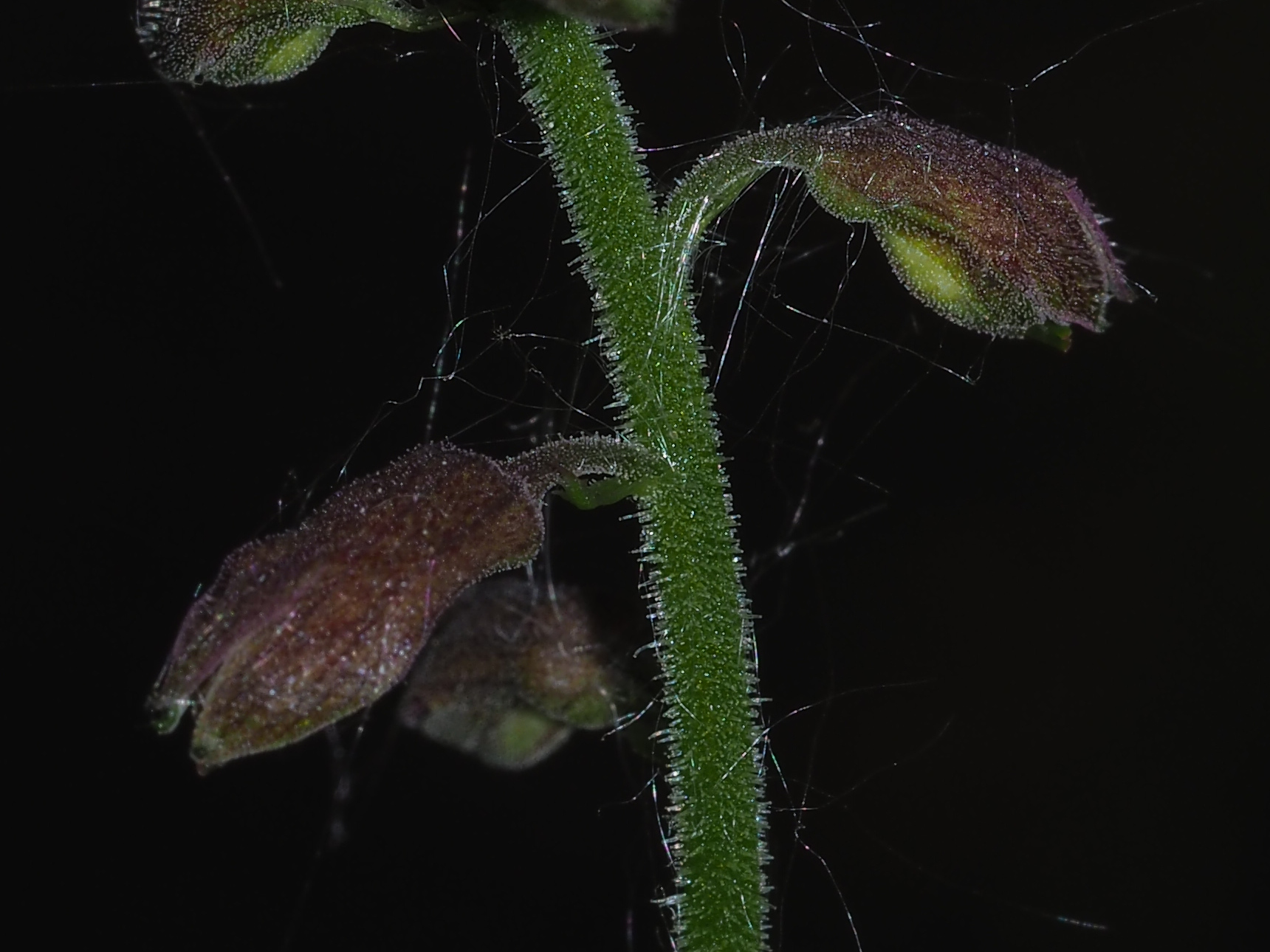

The raceme inflorescence with the lower flower buds are blooming now.

Flowers, enlarged below to see the details.


4 awl-shaped petals.


Fresh anthers are orange.


The older stamens are yellow. 2 styles.

Side view of the flower, enlarged to see the details of the flower.


3 stamens, 2 styles.

Wednesday, 11 May 2022

Bellis perennis 雛菊, 長命菊, 延命菊

Common name: Daisy
Scientific name: Bellis perennis 雛菊, 長命菊, 延命菊
Genus: Bellis 雛菊屬
Family: Asteraceae or Compositae 菊科, aster , daisy, composite or sunflower family

Remarks:

Origin: native

Date: 13th April


A perennial, can reach up to 12 cm. Found in lawn.


All leaves are basal. There are no stem leaves.


Underside of the leaves are hiary.


Side-view of the flowers to see the phyllaries.


Flowering heads 16-25 mm across, radiate (with both ray and disc florets), ray florets white, disc florets yellow. Photo enlarged below to see the florets.


Yellow disc florets in the centre and white ray florets (2 styles could be seen in the above photo) in the preiphery.


Another photo.

Claytonia sibirica 西伯利亞春美草

Common name: Pink Purslane
Scientific name: Claytonia sibirica 西伯利亞春美草
Genus: Claytonia 春美草屬
Family: Montiaceae 水卷耳科*,  spring beauty family, miner's lettuce family

Remarks*: Claytonia was placed in Portulacaceae 馬齒莧科, the purslane family, previously. In the APG III system, Claytonia were moved to a newly adopted family - Montiaceae 水卷耳科. The differences between these two families morphologically are as follows:

a Fruit dehiscence circumscissile, top portion shed intact as a lid (operculum) -- Portulacaceae
Fruit dehiscence valvate starting at the top, without true operculum -- Montiaceae

Origin: Neophyte (established after 1500 AD). It is a native of eastern Asia and western N. America. It was cultivated by 1768 and was first recorded in the wild in 1838.

Date: 13th April

An erect, glabrous annual to perennial, can reach up to 40 cm.

The base of the plant.

Young basal leaf, long-stalked.

Another basal leaf.

Inflorescence terminal at the stem. 2 stem leaves, opposite, sessile but not fused across stem.

2 stem leaves, opposite, sessile but not fused across stem.

Photo enlarged below to see the flower buds.


Flower buds (the right and middle one in the above photo.) The left one is the withered flower.

Photo enlarged below to see the sepals.


Side view of the flowers showing the 2 sepals of each flower.

Photo enlarged below to see the details of the flowers.


5 pink petals, deeply notched.

Another flower enlarged below.


5 stamens, 1 style with 3 stigmas spreaded out.

One more flower enlarged below.


This flower has a fresher style with the 3 stigmas still hold together and not yet spread out.

Could you see the possible pollinator here ? See the enlarged photo below.


A possible pollinator?


Monday, 9 May 2022

Galanthus nivalis 雪花蓮, 雪滴花, 雪花草, 雪滴水仙

Common name: Snowdrop
Scientific name: Galanthus nivalis 雪花蓮, 雪滴花, 雪花草, 雪滴水仙
Genus: Galanthus 雪滴花屬
Family: Alliaceae 葱科, onion family

Remarks*:

Origin: Neophyte (established after 1500 AD). It is a European Southern-temperate species. It was known in cultivation in 1597 and was recorded in the wild since 1778.

Date: 7th & 9th March

A bulbous perennial, can reach up to 25 cm. A large cluster of snowdrops found on the verge of a woodland.

There are 2 leaves for each individual plant. 

---------------------------------------------------------------
The following photos were taken on another location on 7th March. (whereas the above photos were taken on 9th March.)

Leaves are glaucous, linear and flat.

Flower is solitary, nodding; spathe of 2 fused bracts, deeply divided at tip.


Note the 3 inner tepals are much shorter and blunter than outer in Galanthus 雪滴花屬. (vs all tepals are similar in Leucojum 雪片蓮屬.)

Inner tepals emarginate, with green patch near incision.


Flowers white, up to 40 mm across.


Inner tepals with green stripes inside the tepals. 6 yellow stamens and 1 style.