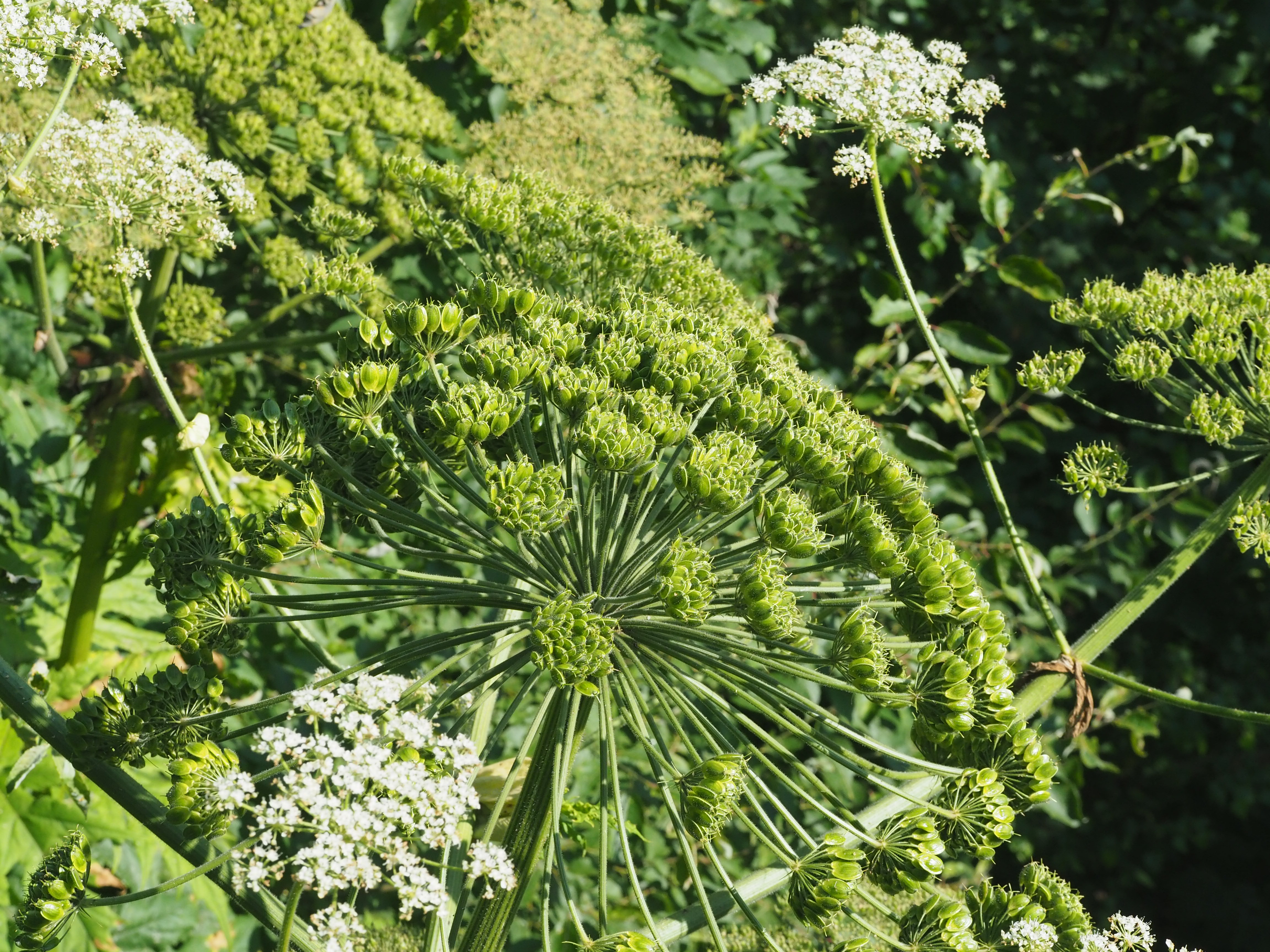
Common name: Giant Hogweed
Scientific name: Heracleum mantegazzianum 大葉牛防風, 大豕草
Genus: Heracleum 獨活屬, 白芷屬
Family: Apiaceae or Umbelliferae 傘形科, 繖形科, celery, carrot or parsley family
Remarks*: The bristles on this plant contain the dangerous furanocoumarins 呋喃香豆素. It will cause dermatitis on contact with skin in sunlight.
Origin: Neophyte (established after 1500 AD). It is a native of S.W. Asia. It was introduced to gardens by 1820 and was deliberately planted by rivers and ponds. It was then first recorded in the wild in 1828.
Date: 13th April, 1st June, 2nd & 18th July
The following photos were first taken on 13th April.
It is an enormous pubescent biennial or perennial, can reach up to 550 cm. The photo above was still a young plant but the leaves are already very large when compared to other plants.
Leaves pinnate to ternate, up to 250 cm long.
Leaflets are very deeply divided, angular, toothed or lobed, lobes acute. (vs leaves simply pinnate. l
eaflets are lobed and
coarsely toothed. The lower leaflets are stalked in Heracleum sphondylium 歐獨活, 豬草, 普通豬草, 牛防風, 牛歐洲防風草, hogweed)
Another larger plant.
It is already a large plant and covered a large area, but is still very short.
Leaflets are very deeply divided, angular, toothed or lobed, lobes acute.
Petiole of a leaf, enlarged below to see the hairs. (Note the leaves of the plant contain the largest amount of the dangerous chemicals furanocoumarins 呋喃香豆素.The hairs of the plants should not be touched on any occasions if you are unprotected.)
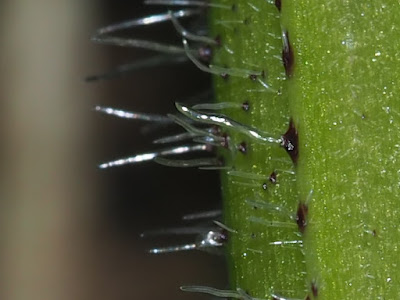
The
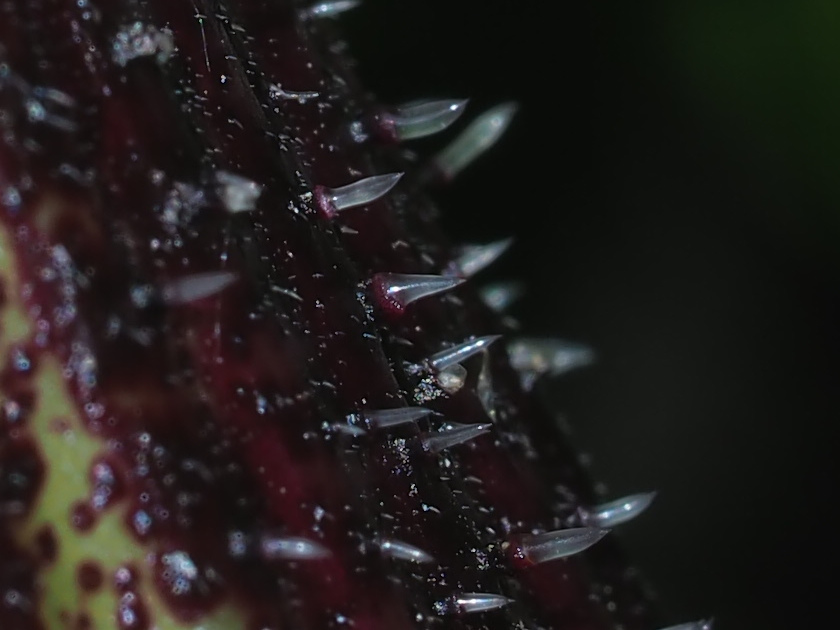
sharp bristles on the petiole. Note there are
purple blotches at the base of these long, sharp bristles. The bristles contain the dangerous furanocoumarins 呋喃香豆素. (vs downy hairs on
Heracleum sphondylium 歐獨活, 豬草, 普通豬草, 牛防風, 牛歐洲防風草, hogweed. No purple blotches at the base of the hairs.)
Another petiole, enlarged below to see the hairs.
The sharp bristles on the petiole. There are purple blotches at the base of the hairs. Note some of the purple blotches joined together to form purple stripes.
The base of the petiole.

Close-up view of the petiole, showing more bristles there.
The stem is full of the sharp bristles, enlarged below to see the densely packed, long, sharp bristles.

There are
no ridges and grooves on the stem with sharp bristles. And
there are distinctive purple blotches at the base of the hairs. (vs there are
ridges and grooves on the downy stem. There
may or may not have purple hue on the stem on
Heracleum sphondylium 歐獨活, 豬草, 普通豬草, 牛防風, 牛歐洲防風草, hogweed. No purple blotches at the base of the hairs.))
The part of the stem near the ground, enlarged below to see the details.
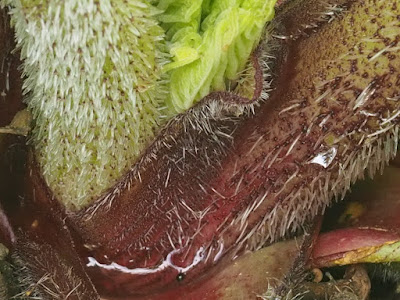
The left petiole in the above photo is densely packed with the sharp bristles.
The base of this short plant.
This area is under control, hoping to eliminate these exotic plants in the near future.
--------------------------------------------------------------------------------------------
The following photos were then taken on 1st June
The leaf become much larger now. Leaflets are very deeply divided, angular, toothed or lobed, lobes acute.
Enlarged view of the tip of the leaf.
Another enlarged part of the leaf.
The side view of the leaf. The petiole is very purple now.
The purple petiole.
The leaf sheath at the base of the petiole.

The leaf sheath at the base of the petiole is swelled.
These plants are almost 2 m high now.
The stem is also very purple now.
The leaf sheath near the top of the stem.
The purple stem.
The petiole enlarged below to see the bristles.

The bristles are shorter in this individual.
The plants are usually found near the river or ponds. (riverside above)
--------------------------------------------------------------------------------------------
The following photos were then taken on 2nd July
This plant was seen at another location by a canal. The plant was about 3 m high. The above photo showed the stem of this large plant.
Zoom-in view of the plant. Hairs are especially prominent at the node.
The fully-grown leaf.
Another fully-grown leaf.
The leaf sheath at the junction of the branches. They are withering.
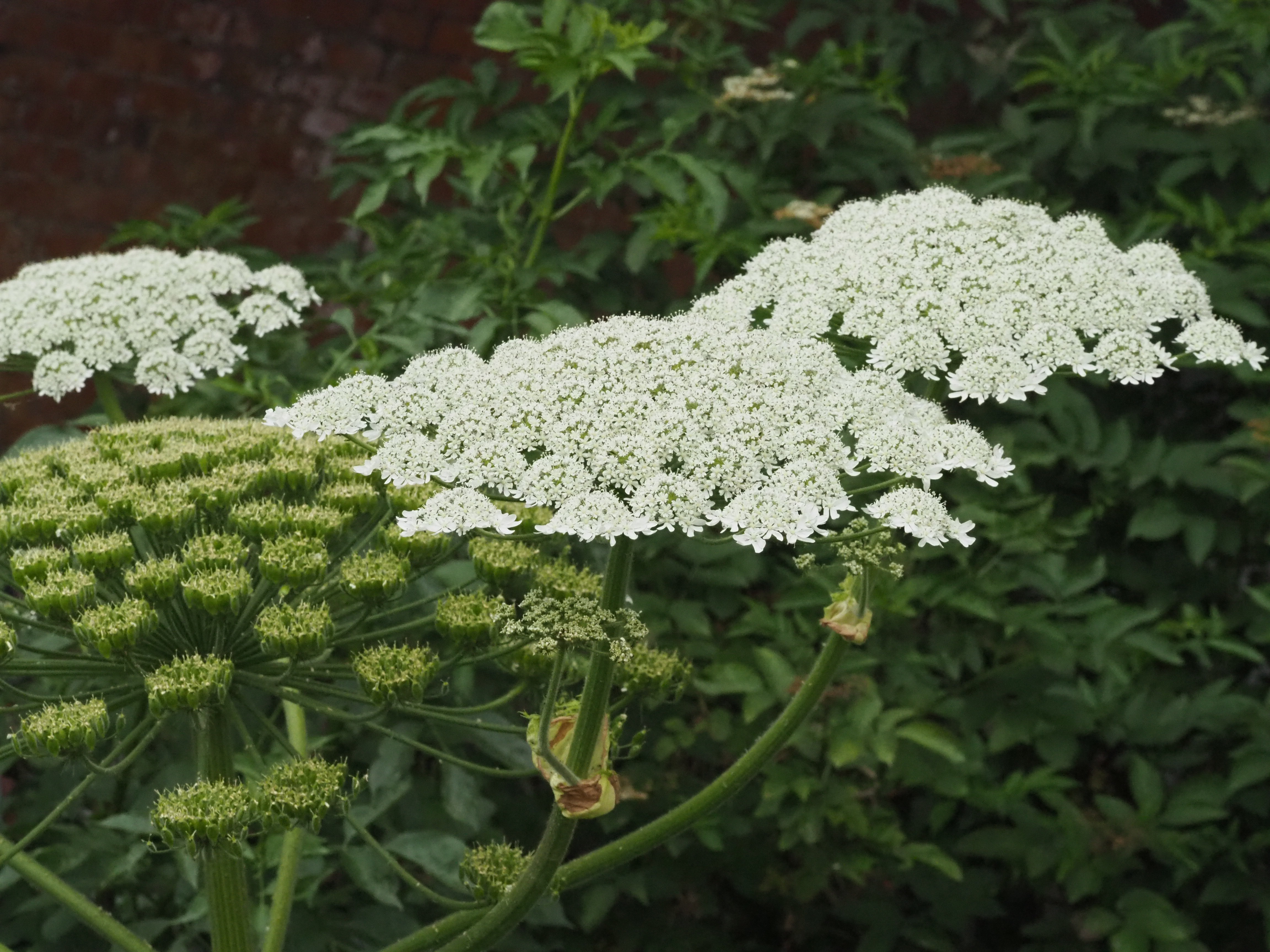
The flower heads are umbrella-shaped or dome-shaped. (vs the
flower heads are flat-topped, curved or like a pom-pom in Heracleum sphondylium 歐獨活, 豬草, 普通豬草, 牛防風, 牛歐洲防風草, hogweed. No purple blotches at the base of the hairs.)There are bracteoles at the base of the secondary umbel (umbellet, umbellule 小傘形花序, 次生傘形花序). There are
more than 50 rays (primary rays) of the umbel. (vs. there are
8-15 rays (primary rays) of the umbel in
Heracleum sphondylium 歐獨活, 豬草, 普通豬草, 牛防風, 牛歐洲防風草, hogweed. No purple blotches at the base of the hairs.)The zoom-in view of one flower head (compound umbel). The
compound umbel is around 50 cm across. (vs around 20 cm across in
Heracleum sphondylium 歐獨活, 豬草, 普通豬草, 牛防風, 牛歐洲防風草, hogweed. No purple blotches at the base of the hairs.)

Cropped photo to show the flowers.
--------------------------------------------------------------------------------------------
The following photos were then taken on 18th July at another location.
Many giant plants are found by a river.
The inflorescence.

A lot of flowers for an individual plant.
They are found beside a river.
They are fruiting now.
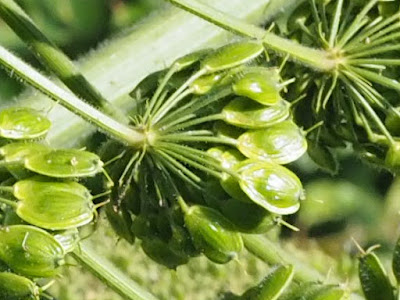
The zoom-in review to see the fruits and the bracteoles underneath,
There are 4 oil ducts (dark stripes) appear on the later stage of the fruits.